
0300 30 20 752 support@skarating.org
London’s Heatwave: The red hot case for sustainable fit out

London’s Heatwave: The red hot case for sustainable fit out

Industry Has Been Saying This for 30 Years.

More recently, young advocates such as Greta Thunberg have been clear about where we were headed. Not alarmist – clear. And weeks like this one we’ve been through are exactly the case study she, and countless scientists, designers, and sustainability professionals before and after her, have been warning about for decades. Except now, it’s not a warning. It’s the news.
 
Schools closed because it was too dangerous for children to travel or try and learn in overheated classrooms. Offices became greenhouses – all that floor-to-ceiling glass doing its job beautifully for natural light and external views until temperatures soared, at which point it became a liability. Air conditioning units run flat out, and electricity bills reflect this. Trains and commercial events are cancelled. The infrastructure and built environment we built for a different climate is simply not fit for this one or the one we’re heading towards.
 
At SKArating, we have been making this argument since our inception. Sustainable design is not a preference – it is engineering for reality. And weeks like this make it impossible to argue otherwise.

The Cost of Getting It Wrong

The irony of weeks such as in June 2026 is not lost on us. Buildings designed to project modernity – maximised glazing, open atria, south-facing facades with no shading or thermal comfort strategy – became the very embodiment of what sustainable design has long warned against. Solar gain unchecked. No passive cooling. No biophilic buffer. The result: indoor temperatures that make working dangerous, not merely uncomfortable, and energy bills that reflect the emergency mechanical cooling required to compensate.

These are not freak occurrences. They are design failures that were and still are predictable – and preventable.

The Triple Bottom Line

What distinguishes the SKArating methodology is its refusal to treat sustainability as a single-axis problem. The triple bottom line – people, planet, and profit – is a design framework that ensures every decision in an interior fit-out or refurbishment is evaluated across three interconnected lenses.
 
Planet. Reducing embodied carbon, maximising resource efficiency, selecting materials with verifiable provenance, and designing for circularity and longevity – not just for certification.
 
People. Thermal comfort, air quality, daylighting, acoustic wellbeing, and biophilic connection. Emotional health and comfort. A building that makes its occupants unsafe has failed, regardless of its energy rating.
 
Profit. Lower operational costs, reduced energy cost fluctuation exposure, higher occupant productivity, greater asset resilience, brand and image value and regulatory future-proofing. Sustainable design is the sound investment – and June 2026 weather patterns proved it in real time, on electricity bills and commercial or social activities across the country.
 
The SKArating framework assesses interior fit-outs and refurbishments across 80+ criteria to create drive and accountability at every stage of design, construction and operation. Not as a burden – as a discipline that makes better buildings.

What You Can Do – Starting Now

The knowledge exists. The methodology is proven. The business case has never been stronger. Here is where to start:
 
Sustainable Design Guidance
Access SKArating’s comprehensive design guidance – practical, measurable, and applicable to your next project from day one.
 
Assessor Training
Become a qualified SKArating Assessor or SKArating Competent Professional.
Gain the skills to evaluate, advise on, and certify sustainable interior fit-outs.
 
Get assessed on your next interior fit-out
Already planning a refurbishment? Bring SKArating in at early briefing and design stage – where the decisions that matter are still available to make.

Be the Change. Make the Change.

We have had 30 years of warnings. We do not need another 30 years of reports. The built environment is where the climate crisis is won or lost – and you are living in the built environment.
 
That makes this ours to shape. The tools are here. The training is here. The moment is unambiguous.

Join the SKArating community and make the change.

Get in touch:

t: 0300 30 20 752 

e: support@skarating.org

Introducing the new SKArating Professional Pathway!

Introducing the new SKArating Professional Pathway!

We are delighted to announce changes to the scheme. With these improvements, we aim for high standards, improve the quality and effectiveness of SKArating, and provide greater openness and transparency for users and assessors alike.

The changes being introduced are:

New Competent Professional Pathway

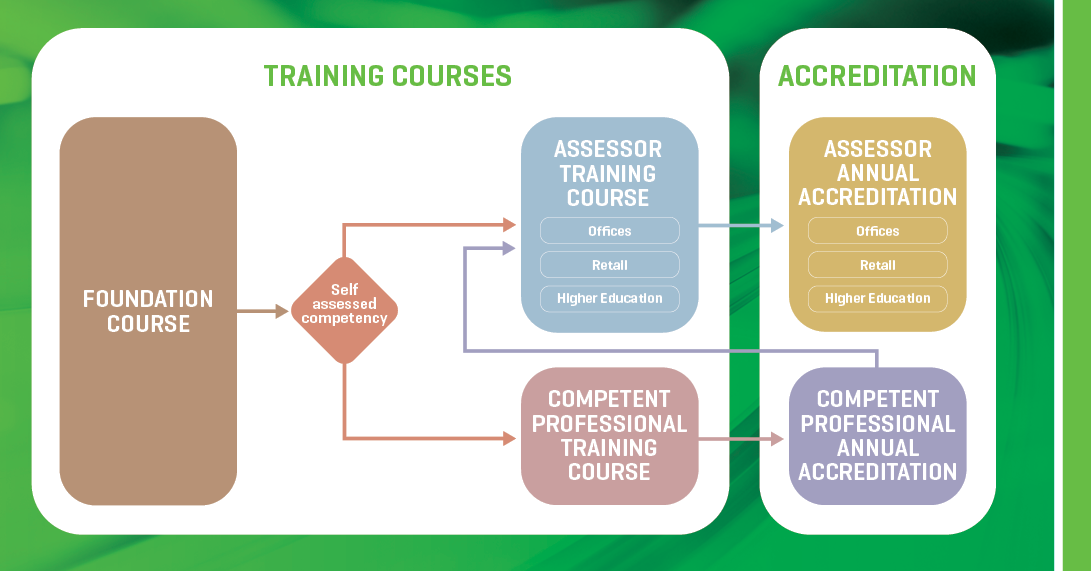
For those looking to explore the scheme in more depth without becoming an assessor, this pathway offers in-depth learning and progression opportunities, helping individuals become more knowledgeable in the SKArating scheme. Please see below to see the new Pathway flow. Registrations are opening to this in November for existing assessors wishing to renew as Competent Professionals. Live training courses for Competent Professionals are starting in January and booking will be open imminently.


Enhanced Accreditation Process

Selecting the right pathway for you is now advised through undertaking a competency approach and self-assessment. We support all who wish to upskill and drive sustainable fitout projects whichever pathway they wish to take. Starting with the Competent Professional Accreditation pathway can lead to the Assessor Accreditation pathway following the achievement of the required competencies. The competencies matrix is a great way to plan the various knowledge and experiences needed to develop oneself into a high calibre professional.


New Auditing Process

A streamlined and clear auditing process will soon be introduced—stay tuned for more details!


If you’d like to learn more, ask questions and join the discussion, sign up for our online briefing(s) via the links below:

  • 20th November, 12-1pm (open to all)

We look forward to seeing you there!
Project Certification Fee Increase (update)

Project Certification Fee Increase (update)

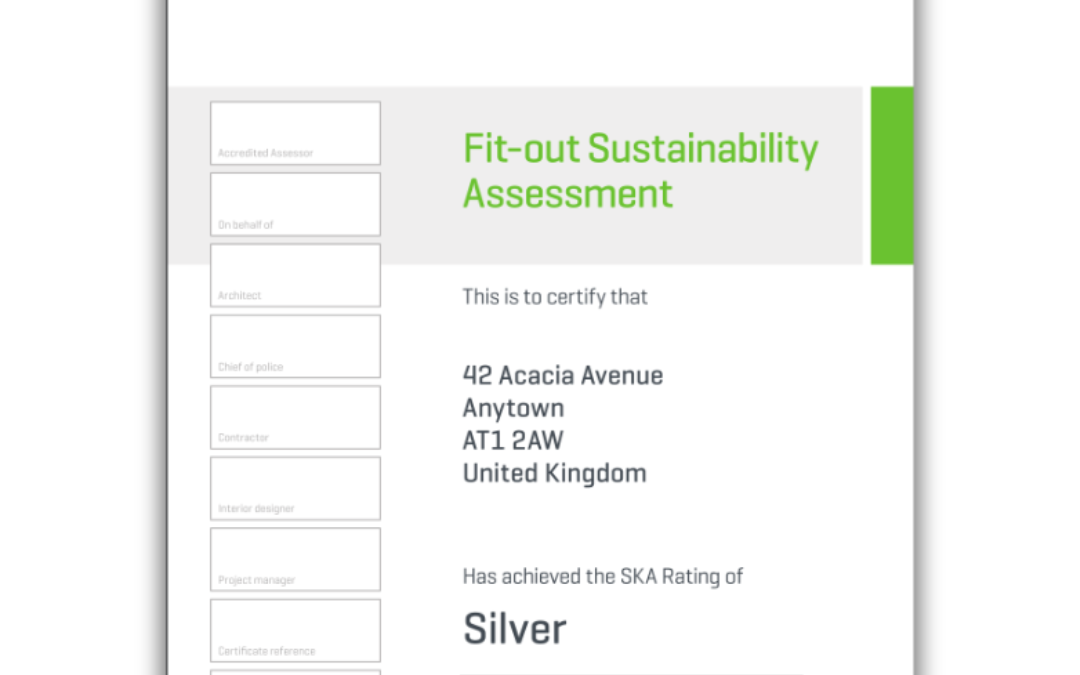
As an update to our “Project Certification Fee Increase” post on the 15th Dec 2023, there is an upcoming fee increase on the SKA rating certificate for the assessment of projects.

The fee will increase from March 4th 2024 to £850 plus VAT. Please ensure your clients or certificate payers are aware of this change in good time before the issue of the certificate.

If you have any questions on this, please reach out to us at support@skarating.org.