Wagamama Clarks Village: SKArating Gold for a gas-free restaurant fit-out
SKArating Case Study | Retail v1.0
Wagamama Clarks Village: SKArating Gold for a gas-free restaurant fit-out
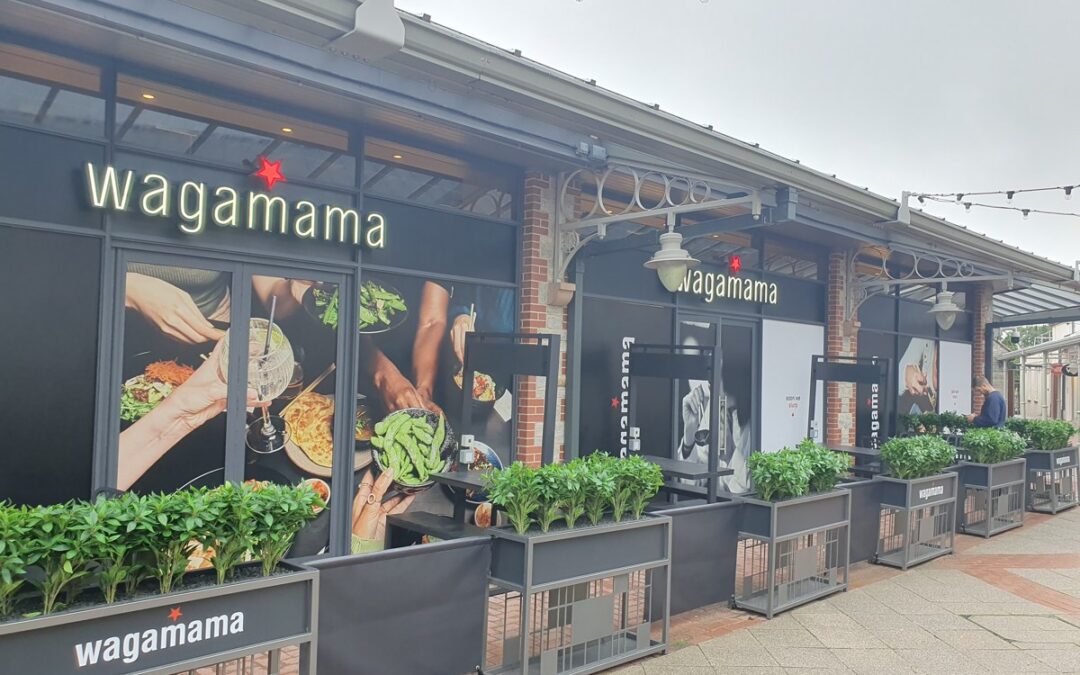
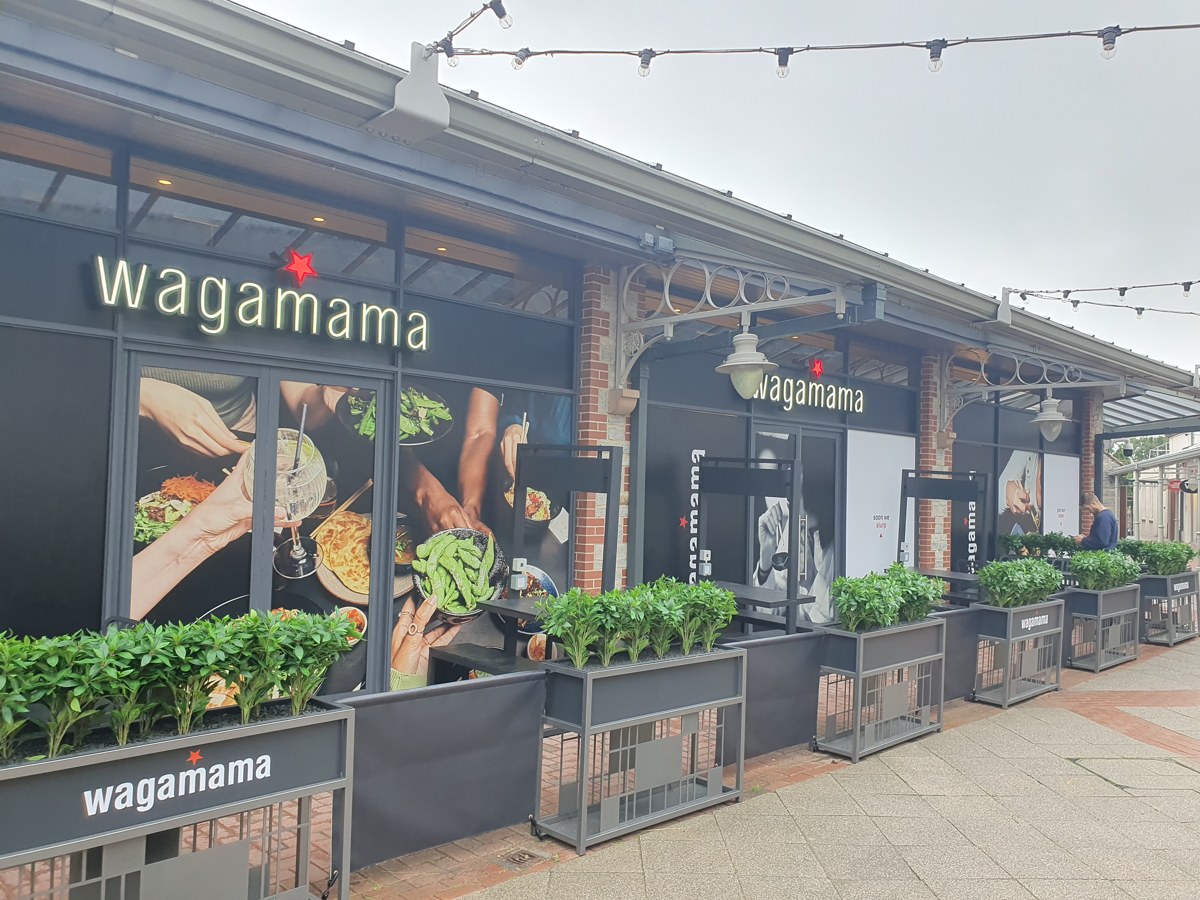
Wagamama’s new restaurant at Clarks Village in Street, Somerset, has achieved SKArating Gold under the Retail v1.0 scheme. The fit-out turned a former retail unit into an all-electric restaurant with no gas, tables made from recycled chopsticks, and detailed energy and water monitoring from day one.
The assessment was led by Stewart Muir, Senior Technical Consultant at Bioregional, working with Alex Neil, Group Head of Construction at Wagamama. The two spoke to Elina Grigoriou of the SKArating Board on the SKArating podcast about how the project came together, and their account forms the basis of this case study.
Project at a glance
| Project | Wagamama Clarks Village |
| Client | Wagamama |
| Location | Clarks Village, Street, Somerset BA16 0BB |
| Project type | Fit-out of a former retail unit as a restaurant |
| Scheme | SKArating Retail v1.0 |
| Rating achieved | Gold |
| SKArating Assessor | Stewart Muir, Bioregional |
| Project manager and QS | Rockshore |
| Architect | Quadrant Design |
| Main contractor | Meridian |
| Landlord | Landsec |
| Project value | Approximately £1.4 million |
Hear the full story on the SKArating podcast. Alex Neil of Wagamama and Stewart Muir of Bioregional talk through how the Clarks Village fit-out came together, and how Wagamama approaches sustainability across its restaurants and day-to-day operations, from energy and water monitoring to recycled chopstick tables and team league tables.
Listen to the episode: How Wagamama Used SKArating to Raise the Bar →
The challenge: proving progress, not just claiming it
Wagamama builds between six and ten restaurants a year and now runs around 80 sites. Its “treading softly” commitment aims to cut emissions by 5% a year from a 2023 baseline and reach net zero by 2040. The construction team wanted its fit-outs to play their part, but it lacked an independent way to measure where it stood.
There was also a perception to overcome. Inside the business, sustainability was often assumed to be expensive, onerous and hard to achieve. Wagamama wanted a standardised, recognised framework that would show what good looks like, and evidence that its claims were real.
Clarks Village added its own constraints. The unit had always been a shop and had never housed a restaurant, so it needed new services throughout, and the opening date had been committed to the landlord.
What difference did SKArating make?
SKArating turned good intentions into verified performance. Before Clarks Village, Bioregional ran retrospective baseline assessments of Wagamama’s West Bridgford and Telford restaurants. These showed the brand was already close to Silver, so Silver became the initial target.
The ambition then rose. On learning that other restaurant brands had achieved Gold, Alex Neil changed the target mid-planning. The project went on to achieve Gold, meeting over 60 measures and exceeding the gateway measures Gold requires.
The scheme’s breadth also changed how the team worked. SKArating cannot be met with five or ten headline initiatives: every category needs action. That pushed the project into areas it might otherwise have overlooked, from the provenance of furniture veneers to the efficiency of hand dryers. The hand dryer the team found proved both cheaper and more sustainable than the model Wagamama had been buying.
Full certification also gave a different result from benchmarking alone. With the Assessor involved, some items the team believed it had achieved in the baseline turned out to fall short, and were adjusted to get them over the line.
In the client’s words
“I don’t want to do anything unless we’re able to prove that we did it to the best of our ability, and that it’s as honest as it can be. What the accreditation gives you is that feeling that we’ve actually done it. It’s a proud moment for me personally and for the business.”
Alex Neil, Group Head of Construction, Wagamama
Quote taken from the SKArating podcast and lightly edited for readability.
What value did the scheme deliver?
The project achieved SKArating Gold with over 60 measures met, and delivered savings Wagamama can carry across its estate.
| Theme | What was delivered at Clarks Village | Photo |
|---|---|---|
| Energy and carbon | An all-electric fit-out with no gas, including induction wok stations in the kitchen. Landsec funded a new electricity cable from the local network to make this possible. | 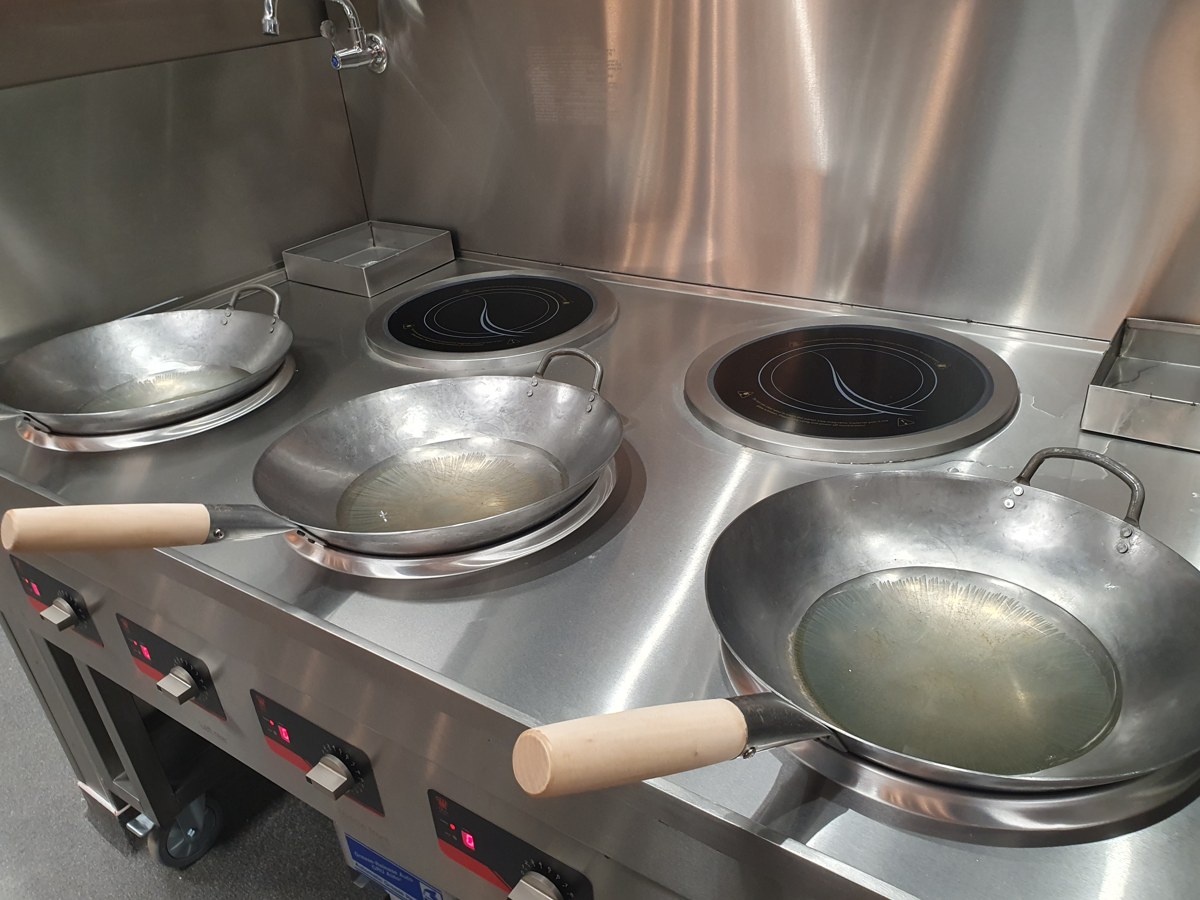 |
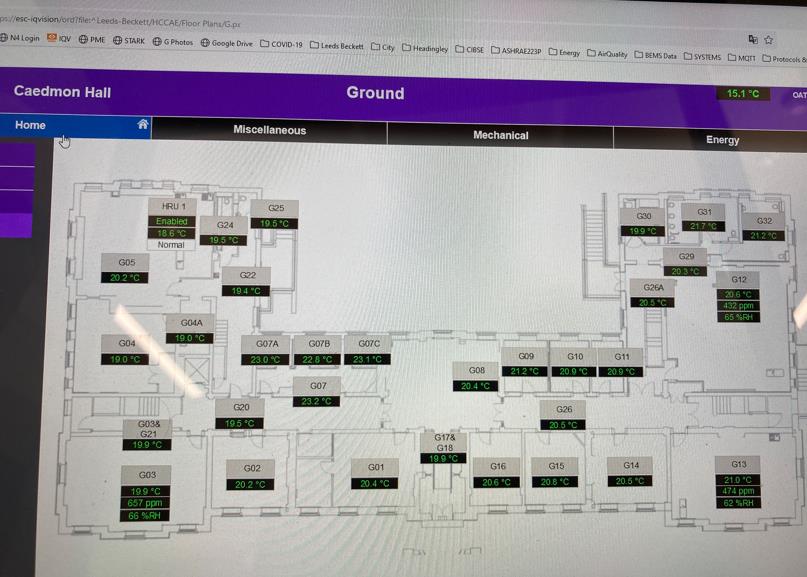
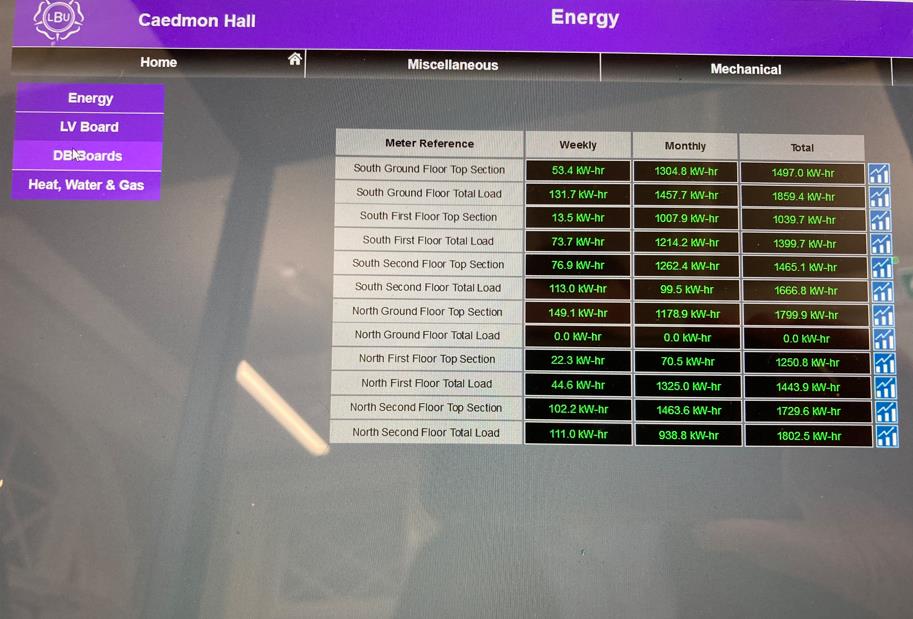
| Control and monitoring | An energy management and control system by Clearworld. Wagamama’s dashboard shows when teams override air conditioning settings, and regional league tables now turn efficiency into friendly competition. | |
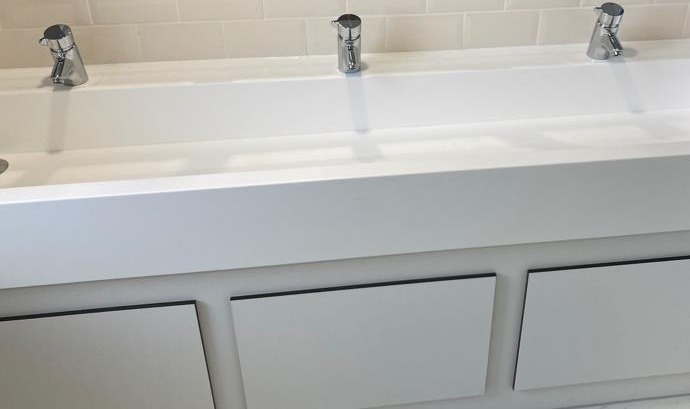
| Water | Detailed water monitoring and reporting, with flow data visible minute by minute. Each device costs around £1,000 and pays back within months by exposing overnight use and hidden leaks. | 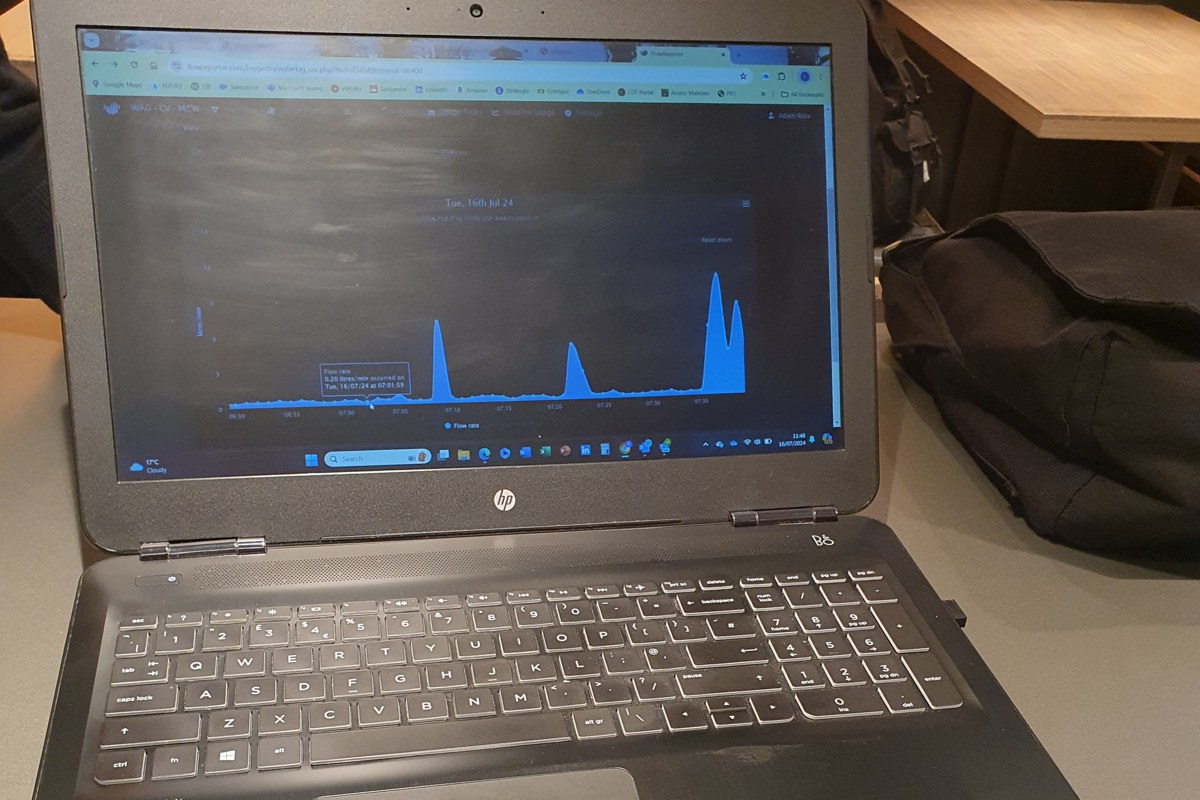 |
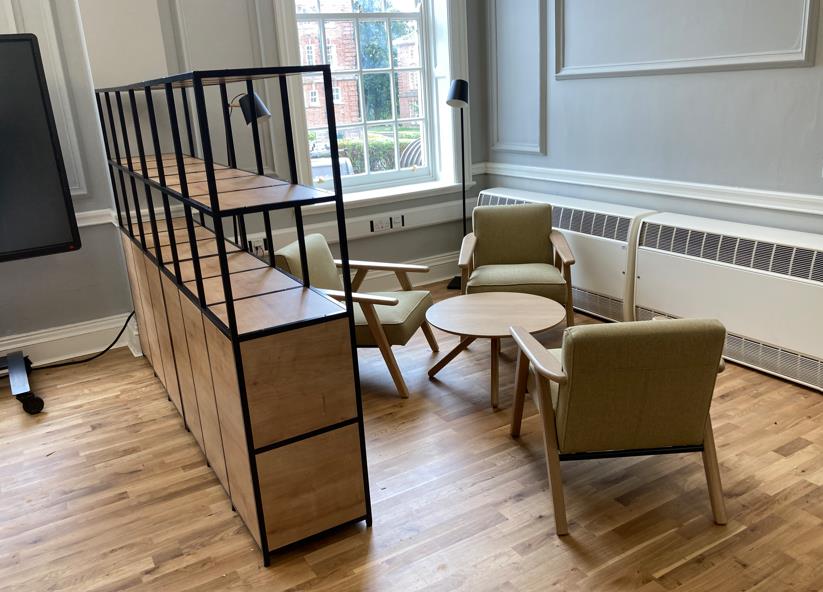
| Materials and circularity | Table tops by ChopValue, made from around 83,000 chopsticks collected from ten Wagamama restaurants. Each table is engraved with its count, from roughly 4,000 to over 10,000. Reclaimed brick slips and furniture meeting an 80% recycled or reused threshold. | 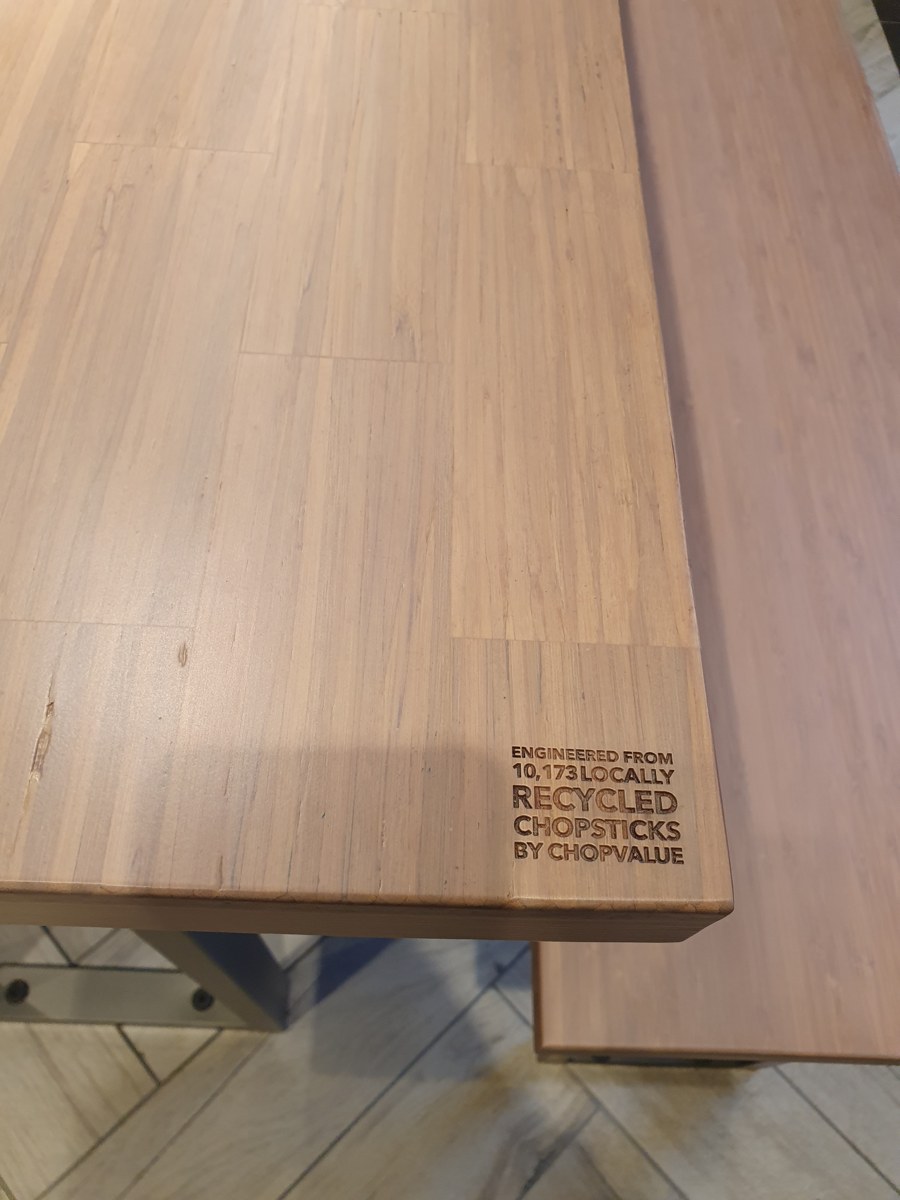 |
| Responsible sourcing | Documented provenance and certification for materials, with suppliers pressed for evidence down their own supply chains. | |
| Transport and wellbeing | Facilities enabling staff to cycle to work. |
The cost was modest and partly one-off. Alex Neil puts the premium at roughly £40,000 to £60,000 on a £1.4 million project, around 3 to 4%. He estimates about half was first-time learning, such as sourcing compliant bespoke lighting, which will not recur on future sites.
The operational case is strong. Monitoring of the kind installed here has identified around £40,000 a year of overnight energy waste at a single Wagamama site, simply from equipment left running when restaurants are closed.
How the project team picked it up
Wagamama introduced SKArating in stages. It first researched what peers were doing, speaking to Nando’s, which had used the scheme in Cambridge. It then commissioned the West Bridgford and Telford baselines before committing to a certified assessment at Clarks Village.
The first requests to suppliers drew a slow response. So Wagamama brought the whole team into one room: Rockshore as project manager and quantity surveyor, Quadrant Design as architect, Meridian as main contractor, and Bioregional as Assessor. Alex Neil made the brand’s commitment clear and asked suppliers to flag any extra cost rather than ignore a requirement.
From there the assessment ran on a single master tracker managed by Rockshore. It listed every measure in scope and the evidence received, and was reviewed weekly or fortnightly before, during and after the build. Suppliers sent evidence, Bioregional reviewed it, and gaps were chased until each measure could be closed out.
The landlord was part of the process too. Wagamama told Landsec from acquisition that it wanted an all-electric restaurant. Landsec paid for a new connection to the local network and supported the shell, core and rooftop plant space the scheme required.
The role of the Assessor
Stewart Muir of Bioregional was the SKArating Assessor, building on Bioregional’s earlier baseline work for Wagamama. Alex Neil is clear that the Gold rating would not have been reached without that support. His role covered five areas:
- Setting the benchmark. Bioregional’s baselines showed Wagamama where it stood before any changes, at low cost and without the pressure of an opening date.
- Interpreting the criteria. Where measures could be read more than one way, the Assessor guided the team, saving time and money on items that might not have counted.
- Bringing in wider practice. Bioregional presented how other organisations approach energy, materials, waste and wellbeing, giving the team new options to try.
- Reviewing evidence. Every claim needed evidence before it could be credited. Stewart reviewed submissions, worked directly with suppliers where needed, and confirmed what was achieved.
- Debriefing and feeding back. After completion, a debrief with Wagamama separated one-off costs from repeatable ones. Practical issues, such as how bespoke light fittings are scoped, were fed back to SKArating to inform the scheme’s development.
In the Assessor’s words
“It’s not just about having maybe five or ten good things you’re doing. It’s so comprehensive, you’ve got to do something on everything. What stood out was the engagement to be ambitious: specifying ambitious energy and water management and control systems, good material use and good design.”
Stewart Muir, Senior Technical Consultant, Bioregional
Quote taken from the SKArating podcast and lightly edited for readability.
Lessons for future projects
Try before you buy. Run a benchmark on an existing site first. The SKArating criteria are free to explore, and a trial removes the time pressure of a live opening.
Allow time for the administration. Evidence gathering takes real effort. Alex Neil admits the team rushed some decisions, including lighting, that could have been procured more cheaply with more time.
Engage contractors early. Contractors arrived with very different levels of sustainability knowledge. Bioregional recommends briefing them sooner, and favouring contractors already familiar with the measures.
Use procurement leverage. Wagamama tenders annually and now favours suppliers who can provide evidence. It is also simplifying its design, for example using full boards to cut waste.
Challenge the default. The cheaper, better hand dryer showed that sustainable choices do not always cost more.
From one restaurant to business as usual
Clarks Village has given Wagamama a repeatable framework for future fit-outs and helped it meet the SKArating goals in its ESG plan. The next step is making these practices routine. Energy dashboards and team league tables are already making efficiency part of everyday restaurant culture, delivering commercial returns alongside environmental ones.
If you are planning a restaurant or retail fit-out, find out more about the SKArating Retail scheme or speak to a SKArating Accredited Assessor at skarating.org.
Images: Stewart Muir, Bioregional. Case study published with the permission of Wagamama.